

Dear Friends,
Years ago, invitations started arriving at my office for all-expenses-paid ski vacations – lift tickets, lodging, dinners, and wine, covered by the company that makes the antidepressant Cymbalta.
All they asked in return was your seat at company presentations, much like staying free at a resort or sitting through a two-hour breakfast in exchange for getting pitched on a timeshare. I have been to dinners right here in Fort Bragg put on by drug companies, and when you come out of there, if you’re a prescriber, of course you want to prescribe these medications.
I thought of those invitations this fall while reading The New York Times.
On September 28, the paper reported that the Department of Veterans Affairs will require signed informed consent next year before clinicians prescribe antidepressants to veterans under thirty or combine opioid painkillers with sedatives like Xanax and Valium. Coverage focused on medical-group complaints that written warnings stigmatize care. Six weeks later, headlines praised a Lancet Psychiatry analysis of 115 trials (over 30,000 patients past twelve weeks), naming two antidepressants, Lexapro and Cymbalta, as the best of the bunch – though the authors noted over half of the head-to-head trials were designed in ways that could tilt the results.

Put those stories side by side and you see how psychiatry has operated for forty-five years. Starting a pill is effortless; getting honest long-term odds, or help stopping, has taken a federal mandate just to put ink on paper.
That prescribing reflex runs deep. Years ago, I treated a man addicted to OxyContin from a local doctor. With my patient beside me, I phoned that physician and asked him to stop prescribing the pills. He agreed, and my patient confirmed on the line:
“Please don’t give me any more of these.”
Two weeks later, my patient walked back in straight from that clinic holding ninety fresh OxyContin.
When I worked as a young psychologist in 1961 at New Hampshire’s Laconia State School, attendants wrapped agitated patients in sailboat canvas, sprayed them with ice water, and struck them with soap bars stuffed inside stockings. When modern medications cleared those wards, clinicians my age wanted to believe we had exited the “dark ages” and entered an era of pure brain science.
It took investigative journalist Robert Whitaker to show me how much was marketing. Answering The New York Times on October 5 in “The New York Times Fails Our Veterans,” he asked what the paper skipped: after nearly twenty years of expanded VA screening and prescribing, veteran suicides and disability claims kept climbing. What outcome would a consent form delay?
Let’s take a brief break here, just as we used to on the radio.
Before my surgery, I recorded my complete mind-control playbook on video. The feedback from early students has been positive so far. The one thing that didn’t land was the name, The Golden Reset, so I have renamed it for what it is: 90-Minute Mind Control.

After your first viewing, you can come back to any lesson whenever you need it.
But it’s the practice videos that make this material effecvtive: six, 60-90-second exercises I recommend doing many times a day, on their own or alongside traditional therapy.
And unlike a prescription, there is nothing to refill, nor ongoing fees. This is your body’s own internal medicine.
Here is what people are saying:
“With all the self-help programs out there, my biggest problem was overwhelm. This gave me a way to incorporate the tools into my daily schedule. Knowing I’m in control has been liberating.” – Cajun T.
“Conscious breathing helped me keep my wits in a stressful situation instead of rushing straight to the worst-case scenario. My focus is better, and my self-talk is quieter.” – Carolyn A.
“I find myself doing deep breathing throughout the day, and the calm after the Golden Light exercise carries right over into work and difficult conversations.” – Dawn W.
“Really well-designed course.” – Vicente B.
One full lesson, “The 3 a.m. Mind,” is free to watch on the course page. The whole course is $65 through Sunday, November 22, with code LAUNCH65, or it comes included with an annual membership ($80 a year).
And now back to News & Notes…
What belongs on an informed-consent sheet
While off the microphone recovering from knee surgery in Fort Bragg, I am reviving my old segment – News & Notes in Psychology and Medicine – to test headlines against long-term data. I have interviewed Robert Whitaker four times on Mind Body Health & Politics: in 2011, 2016, 2024, and this spring’s video interview. Nobody I have interviewed over twenty years has shaped my practice more. On camera earlier this year, he laid out three facts that belong on every consent sheet.
First, depressed patients do not start out short on serotonin. The chemical-imbalance claim was guessed backwards in the 1960s from how early pills acted on nerve junctions, and the American Psychiatric Association’s own textbook declared that “chemical imbalance” theory dead in 1998 – later underscored by Joanna Moncrieff and colleagues (2022). Drug ads repeated the slogan for years anyway.
Second, when an SSRI (the Prozac family of antidepressants, including Zoloft, Lexapro and Paxil) pushes serotonin up like an accelerator, a living brain presses the brake to keep its balance – making less serotonin of its own and cutting back the receptors that respond to it, as psychiatrists Steven Hyman and Eric Nestler documented in 1996. As Robert told me on air:
“Once people go on the antidepressants, they do in fact have a low serotonin system in their brain, physiologically. In other words, the drug induces the very change that was hypothesized to cause the problem in the first place.”
I see that trap in my practice. One patient of mine has been on one of these drugs for twenty years. She doesn’t know what it’s like not to be on it, and she still seems depressed to me. As Robert told me, after twenty years it is really tough to come off, because the body has adjusted to the drug’s presence.
Third, long-term cure rates collapsed under audit. The government’s largest real-world antidepressant study, a $35 million trial called STAR*D (4,041 patients), reported in 2006 that about 70% recovered. When psychologist H. Edmund Pigott and colleagues obtained the protocol and patient records and reanalyzed them in BMJ Open (2023) under the trial’s own original rules, the recovery rate dropped to 35%. An earlier analysis by the same team (2010) found that only 108 of the 4,041 patients recovered and stayed well through the year of follow-up – roughly 3%. Meanwhile, a 2025 analysis in The American Journal of Medicine showed median trials still run eight weeks against five years of real-world use, with fewer than one trial in twenty monitoring withdrawal.
Three questions for your prescriber
With any patient or family, I hold two rules: never shame anyone for taking a pill, and never rush off a psychiatric medication abruptly on your own. Informed consent starts with three questions you can print and carry into your next appointment:
What does research past one year show for staying on this medication versus non-drug care?
If I test lowering my dose later, will you supervise a slow taper over months?
What daily signs are we tracking together so we know in six months whether I am genuinely flourishing or merely numbed?
None of this means stopping a psychiatric medication on your own. Nothing here is medical advice; never alter a dose without clinician supervision. Informed consent means knowing what heals over time without scrambling your brain chemistry.
Read on for what Duke University’s ten-month trial found when depressed patients paired running with Zoloft, what the eight-year stimulant study showed in children, independent tapering directories, the 1-to-10 self-assessment I use in my practice, and our Robert Whitaker Archive Reader’s Guide.
Why adding a pill undercut exercise
My favorite depression study comes from James Blumenthal, Michael Babyak, and their Duke University team in Archives of Internal Medicine (1999) and Psychosomatic Medicine (2000). They assigned 156 older adults with major depression to four months of aerobic exercise (thirty minutes, three times a week), sertraline (Zoloft), or both together. At four months, all three groups improved similarly.
Ten months from the start, the numbers parted sharply. Among recovered patients, 38% on Zoloft alone relapsed versus 8% on exercise alone. Most striking: in the exercise-plus-Zoloft group, 31% relapsed – nearly four times the relapse rate of exercise alone. Adding the pill blunted the lasting benefit of moving their bodies.
I proved that in my own life at forty, when I was in a lousy mood every morning that took half the day to lift. I couldn’t run a hundred yards. So I ran a hundred yards one day, a hundred the next, and kept adding until I could run an hour every day, and I finished my first marathon within three years. Reaching for something outside to fix a mood inside is like looking in the mirror, seeing your hair out of place, and reaching out to touch the mirror. At the end of our spring interview, Robert Whitaker added what every recovered patient he interviewed told him: nobody said the drug did it. What everybody said is that they made a connection with somebody who believed in them – a point echoed in Julia Hotz’s The Connection Cure.
What I tell twenty-year patients (and parents weighing stimulants)
The same short-term blind spot governs childhood stimulants. In a federal study of 579 children with ADHD, run by the National Institute of Mental Health, 14-month symptom checklists favored Ritalin. By three years that edge vanished, and at six to eight years, children still taking stimulants had worse symptoms, greater impairment, and modest height suppression – alongside soaring federal disability rolls.
When discussing any change with a clinician, watch out for fast dose drops: stopping abruptly can bring on a hard rebound, and for some people sexual side effects that last long after the pill is gone – a risk European regulators have warned about since 2019. Independent tapering directories and physician-finder resources live at iipdw.org, theinnercompass.org, and rxisk.org.
Today’s Practice: The 1-to-10 Self-Assessment (and Ten-Minute Walk)
Adapted from my April 8, 2016 broadcast, run these four steps first:
Sit alone and score yourself 1 to 10. Put your phone away and rate your physical health and mental outlook from 1 to 10.
Keep two home tools handy. A blood-pressure cuff and a $15 oximeter. Think of your arteries as a garden hose connected to itself in a closed loop: step on part of it, or heat it up, and the pressure rises everywhere. Aim for a reading of 120 over 80 or less.
Locate the buzz for sixty seconds. Anxiety feels like an electrical buzz in your chest or belly. Before reaching for food, drink, or a pill, close your eyes for one minute, put one hand on your chest and one on your abdomen, and breathe so the lower hand rises while the chest hand stays still – five times a day.
Set a day, clock time, and friend. “I am going to exercise” is a wish. Write down: “Saturday and Sunday at 8:30 a.m., I am walking ten minutes with Eloise.” Walk ten minutes daily this week, add two minutes next week, and write back to tell me how it lands.
My course also provides a 24-page workbook that will help you make this practice and others a natural part of your routine- like breathing or going to the bathroom.
Archive Reader’s Guide: Robert Whitaker on Anatomy of an Epidemic
The One-Minute Summary
The imbalance slogan came backwards. Psychiatry’s own textbook declared the serotonin-shortage hypothesis dead in 1998, long before drug ads ever slowed down.
Brain adaptation explains the rebound trap. Chronic SSRI exposure prompts the nervous system to scale down its own natural serotonin production and receptors (Hyman & Nestler, 1996), making sudden withdrawal feel like proof you “need” the drug.
Short trials hide long-term odds. Median approval trials ran roughly eight weeks while real-world prescriptions run five years or more – and independent reanalysis of the $35 million STAR*D trial put full-year stay-well recovery near 3%.
The Golden Nugget
When Whitaker asked people who had rebuilt their mental health after long-term psychiatric medication what made the difference, none credited a pill. They said they made a connection with somebody who believed in them.
Food for thought.
Golden light,
Dr. Richard Louis Miller.
The 10 Commitments
Available for pre-order soon.
“You have a maintenance manual for your car. Maybe one for your refrigerator. But do you have a health maintenance manual for yourself? Most people don’t.”
– From the introduction to The 10 Commitments
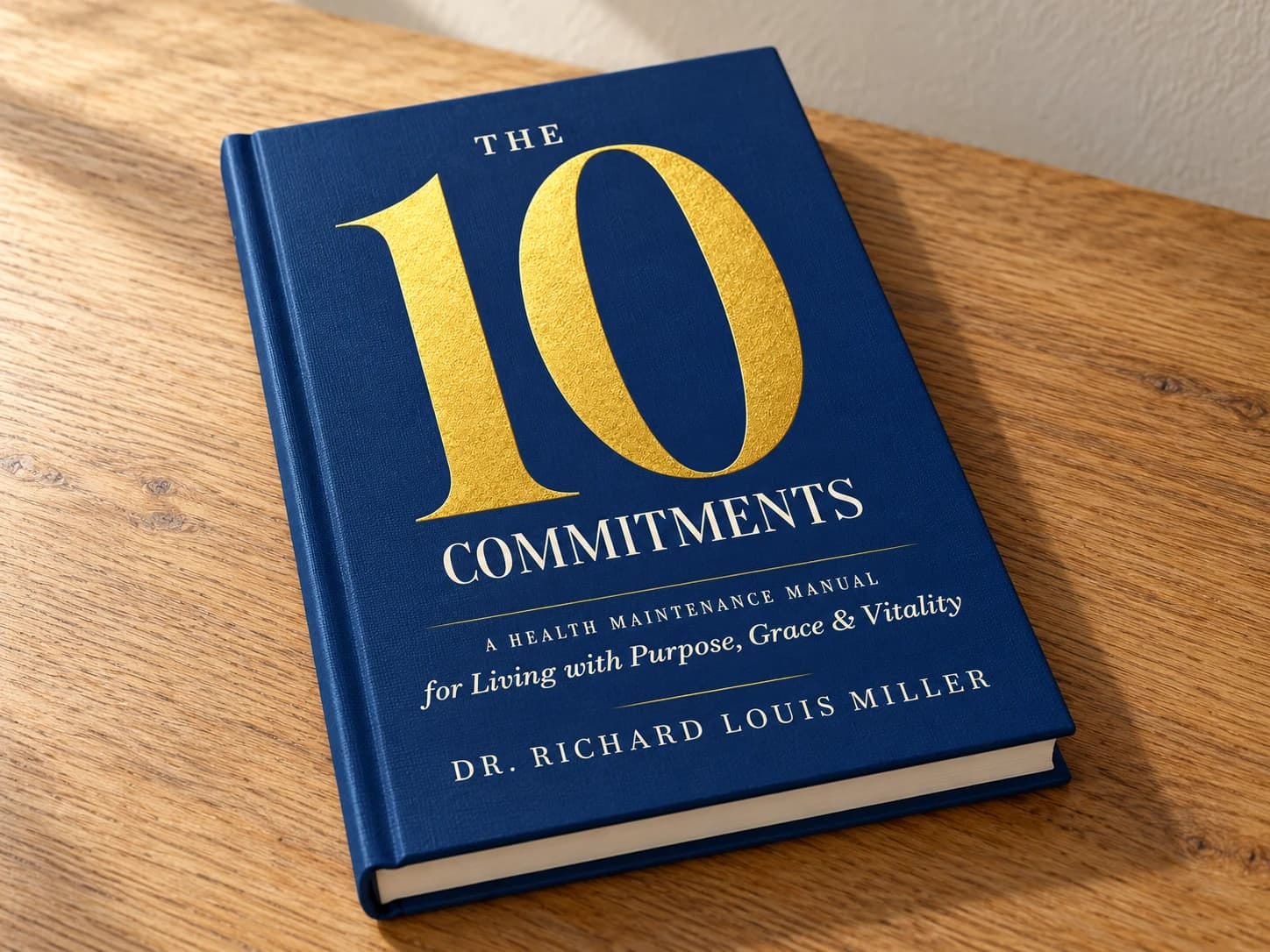
A Health Maintenance Manual for Living with Purpose, Grace, and Vitality
A practical guide to the daily commitments that support a life of purpose, health, and vitality – drawing on nearly nine decades of life and more than sixty-five years of clinical practice to make the work concrete and usable.
Advance endorsements
“Dr. Richard Miller’s The Ten Commitments is a vital, masterfully crafted guide for anyone seeking to cultivate true vitality, purpose, and grace in their daily life.”
— Robin Carhart-Harris, PhD, Ralph Metzner Distinguished Professor of Neurology, Psychiatry and Behavioral Sciences, University of California San Francisco
“Richard Miller and I share a lifelong commitment to practicing health. In The 10 Commitments, he brings that dedication to the page through personal stories and simple practices readers can make their own. His affection for life comes through.”
— Christopher Hobbs, PhD, herbalist, mycologist, and author of Christopher Hobbs’s Medicinal Mushrooms
“Richard Miller is living proof of what I have spent my career advocating: how we age is far more within our hands than we might think. The 10 Commitments turns a remarkable life into ten practices readers can begin today.”
— Maddy Dychtwald, co-founder and president of Age Wave; author of Ageless Aging
“Aging well is about more than longevity. It is about vitality, purpose, connection, and remaining open to awe. The 10 Commitments is an inspiring, practical guide to doing just that.”
— Michael Amster, MD, physician and co-author of The Power of Awe
“The 10 Commitments is a practical, engaging guide to living with greater energy, balance, and wisdom. Drawing on a lifetime of experience and memorable stories, Richard Miller offers accessible ways to care for our minds, bodies, and emotional well-being with intention and compassion.”
— Kristin Neff, PhD, author of Self-Compassion and Fierce Self-Compassion
My Other Books
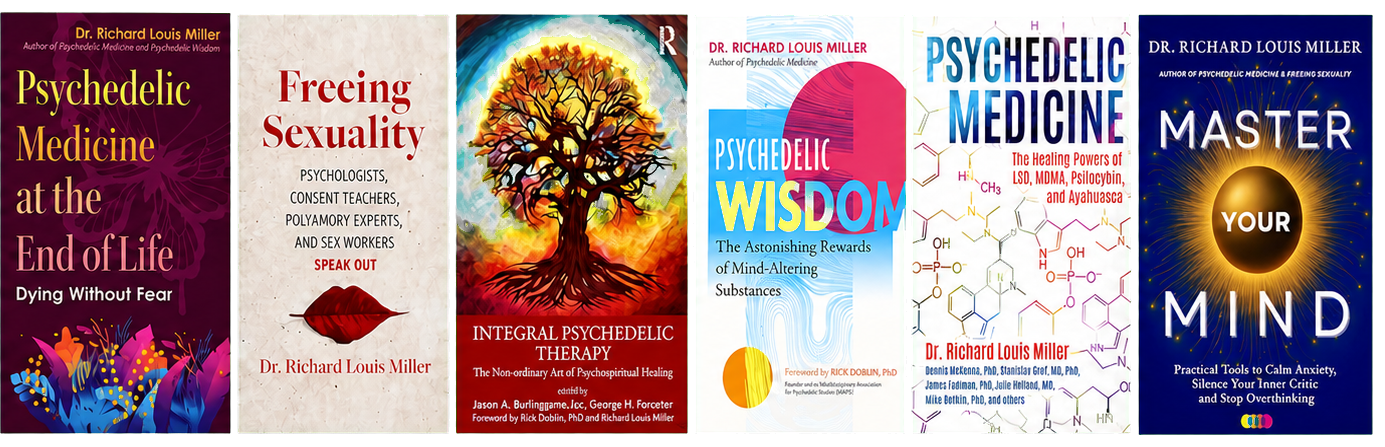
The Adverse Effects and Therapeutic Potential of Psychedelic Medicines
Freeing Sexuality: Psychologists, Consent Teachers, Polyamory Experts, and Sex Workers Speak Out
Integral Psychedelic Therapy (co-edited with Jason A. Butler & Genesee Herzberg)
Psychedelic Wisdom: The Astonishing Rewards of Mind-Altering Substances
Psychedelic Medicine: The Healing Powers of LSD, MDMA, Psilocybin, and Ayahuasca
Dr. Richard Louis Miller is a reader-supported publication. To receive new posts and support my work, consider becoming a free or paid subscriber.